
 Search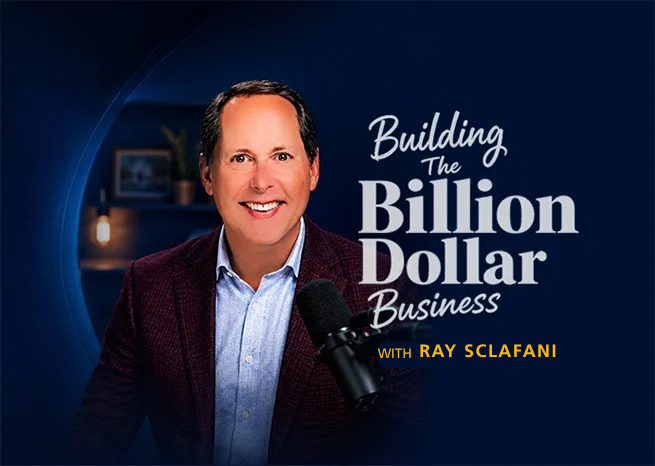
Episode #112
Why Talent Calibration Matters More Than Ever
Building the Billion Dollar Business with RAY SCLAFANI
EPISODES
EMPOWERMENT
INSIGHTS
Executive Summary
In this episode of Building the Billion Dollar Business, Ray Sclafani makes the case that talent calibration is no longer an optional leadership practice for advisory firm owners. It is an executive imperative.
Drawing on research from McKinsey, Gartner, SHRM, and Deloitte, Ray connects the growing difficulty of recruiting and retaining high performers directly to enterprise value and firm growth outcomes.
He introduces a practical four-step calibration framework that helps leadership teams move beyond good intentions and build the discipline required to align people, roles, and execution with the firm's strategic priorities.
For financial advisory firm owners building toward scale, this episode reframes talent as a boardroom agenda item, not a management afterthought.
Key Takeaways
Talent calibration is distinct from succession planning. Succession asks who may be ready for a bigger role in the future; calibration asks whether the right people are in the right roles performing to the right standard today.
People performance is business performance. McKinsey research shows that firms focused on people performance are 4.2 times more likely to outperform peers, with 30% higher revenue growth and five percentage points lower attrition.
Leadership teams must separate three distinct concepts: performance (what someone delivers now), potential (capacity to handle greater complexity), and readiness (ability to take on specific responsibility within a defined timeframe). Blending all three leads to weaker decisions.
Effective calibration begins with the firm's future work, not individual names. Leaders must first define what the firm must execute over the next 12 to 18 months, then ask what capabilities are required to get there.
Calibration frequency matters. Senior and key execution roles warrant at least quarterly review; broader talent groups benefit from twice-a-year review, with increased frequency during rapid growth, acquisition integration, or founder transition.
Transcript
Welcome to Building the Billion Dollar Business, the podcast where we dive deep into the strategies, insights, and stories behind the world's most successful financial advisors and introduce content and actionable ideas to fuel your growth. Together, we'll unlock the methods, tactics, and mindset shifts that set the top 1% apart from the rest. I'm Ray Sclafani and I'll be your host.
We're going to begin today's episode with an obvious statement, but hang with me for a moment. The future of the wealth management industry will be shaped by talent. Of course, strategy will matter, technology will matter, scale and access to capital is going to matter, but none of it will matter much if your firm is unable to identify, develop, align, and deploy talent to the work that matters most. And that is why talent calibration becomes an executive imperative.
The Society for HR Management's 2026 Talent Trends Research found that 68% of HR professionals reported difficulty recruiting full-time employees, and 53%, more than half, said recruiting had become more difficult compared to one year earlier. SHRM also reported that 80% of HR professionals had the greatest difficulty finding candidates with systems and resource management skills, including judgment, decision making, complex problem solving, and time management. These are not just hiring gaps. These are leadership and execution gaps.
Gartner reported that only 30% of managers who participate in talent reviews believe their leadership bench is strong. Gartner also found that 70% of managers said talent reviews are not driving the necessary development. And that tells us something important. The issue is not simply that firms need to review talent. The issue is that firms need to review talent in a way that leads to better decisions, development, and execution.
McKinsey's research on performance management found that companies focused on people performance are 4.2 times more likely to outperform their peers with 30% higher revenue growth and five percentage point lower attrition. And that is why this conversation belongs at the executive table. People performance is business performance.
Deloitte's 2026 Global Human Capital Trends Report found that seven in ten business leaders say their primary competitive strategy over the next three years is to be fast and nimble. Deloitte also found that leaders identify two major drivers of success: first, accelerating how people and resources are organized around work; and second, increasing the organization's and workforce's ability to adapt quickly. That is exactly what calibration is meant to support.
So let's be clear about what talent calibration is. It's the executive leadership team's discipline for aligning judgment on people, roles, performance, readiness, capability, and execution risk. While it informs succession, it is not primarily a succession planning exercise. Succession asks who may be ready for a bigger role in the future. Calibration asks a more immediate operating question: do we have the right people in the right roles performing to the right standard against the work that matters most right now? That's an important distinction, and it matters because many firms spend a great deal of time on strategy and far less time aligning on the talent required to execute it.
They review revenue and acquisitions, margins, investments, service models, technology, growth plans. And then they give less disciplined attention to the people who have to make it all happen. Caring about people is not the same as calibrating talent. One is intent, the other is discipline.
As firms grow, this discipline becomes more important. The solo advisor model is giving way to teams, and teams are evolving into ensembles, and ensembles are becoming enterprises. Founders are thinking about continuity. Next generation leaders want clarity and opportunity. Clients expect a deeper bench, and organic growth requires more than one rainmaker. AI will change workflows, but it will also increase the premium on judgment, leadership, trust, and adaptability. So the better question for an executive team is not: do we have good people? Most firms do. The better question is: are we aligned on what our people need to do next? And that is where calibration belongs.
I want to share a four-step process for having stronger calibration conversations as an executive team.
Step One: Start with the future work of the firm. Before discussing individual names, the leadership team should define the work the firm must execute over the next 12 to 18 months. That may include organic growth, client segmentation, margin discipline, leadership development, acquisition integration, AI adoption, team-based client delivery, founder transition, or client continuity. The point is to start with the business agenda first rather than the people list. Then ask: what capabilities do we need to execute this future? That one question shifts the conversation from personal preference to enterprise need. The question is no longer "do we like this person?" It becomes "can this person help us execute where the firm is going?"
Step Two: Define the roles that matter most for execution. Not every role requires the same level of calibration. The executive team should first focus on roles with significant execution risk. In a wealth management firm, that may include lead advisors, associate advisors, client service leaders, operations or investment leaders, planning department heads, business development leaders, and people managers. For each role, the team should ask what the role is accountable for today and what it will need to be accountable for as the firm grows. Many firms have titles that have not kept pace with the business. A person may hold the same title, but the role may have become larger, more complex, and more closely tied to enterprise value. This is where leadership teams have to be brutally honest. Some performance issues are really about role clarity. Some capacity issues stem from poor role design. Some development gaps are management issues. Calibration helps the executive team separate those issues before making assumptions about the person.
Step Three: Evaluate talent using evidence, not impressions. This is where the quality of the conversation will either rise or fall. A leader saying "this person is great" is not enough. A leader saying someone has potential is not enough. A leader saying the team likes this person is not enough. The better questions are grounded in evidence: What did the person commit to? What did they deliver? What changed as a result of their work? How did their work affect clients, teammates, growth, capacity, or execution? Where did they create leverage? Where did they demonstrate judgment? Where did they develop others? Where are they ready for more? And where do they need coaching, structure, better support, or clearer expectations? This also requires the team to separate performance from potential from readiness. Performance is what someone is delivering now. Potential is their capacity to handle greater complexity. Readiness is their ability to take on specific responsibility within a specific timeframe. These are distinct concepts, and when leadership teams blend them together, they make weaker decisions.
Step Four: Translate calibration into movement and action. A calibration meeting that ends with notes and no decisions is merely documentation. The leadership team should leave with clear decisions and owners. Who needs a clearer role definition? Who needs coaching? Who needs a stretch assignment? Who is ready for greater responsibility? Who needs stronger management support? Who may be in the wrong seat? Who is carrying too much? Who is a hidden future leader? Who needs a direct performance conversation? And who owns the next step? This is where calibration becomes execution discipline. It connects strategy to people decisions and people decisions to action. The action may be a development plan, a role change, a coaching conversation, a capacity decision, a leadership opportunity, or a clearer performance standard.
The rhythm matters too. For most senior leaders and key execution roles, this should happen at least quarterly. For broader talent groups, twice a year might be sufficient. For teams undergoing acquisition integration, founder transition, rapid growth, or meaningful role redesign, the conversation may need to occur more often because execution risk is higher. The point is not to create bureaucracy. It is to create better leadership discipline.
The future will not reward firms that simply have more people. It will reward firms that can clearly see talent, develop it intentionally, and move capability toward the work that matters most. Talent will become more important in the future. That means the quality of talent conversations must improve now.
With each episode, I include a few coaching questions for your next executive team conversation. Today there are four. One: what future work will require stronger talent, sharper leadership, and greater capacity over the next 12 to 18 months? Two: where are we relying on talent assumptions rather than talent evidence? Three: which roles pose the greatest execution risk if performance, readiness, or capacity is unclear? And four: which talent decision, development action, or role clarification would most improve execution right now?
Thanks for listening. Please like and share the episode with someone you know needs to hear it. Until next time, this is Ray Sclafani. Keep building, growing, and striving for greatness. Together, we'll redefine what's possible in the world of wealth management. Be sure to check back for our latest episode and article.
Questions Financial Advisory Firm Leaders and Team Members Often Ask
What is talent calibration for a financial advisory firm? +
Talent calibration is the executive leadership team's discipline for aligning judgment on people, roles, performance, readiness, capability, and execution risk. It is not primarily a succession planning exercise. Rather than asking who might be ready for a bigger role in the future, calibration asks whether the firm currently has the right people in the right roles performing to the right standard against the work that matters most right now.
How is talent calibration different from succession planning? +
Succession planning asks who may be ready for a bigger role in the future. Talent calibration asks a more immediate operating question: do we have the right people in the right roles performing to the right standard against the work that matters most right now? While calibration informs succession, the two are distinct disciplines and should not be conflated. Many firms conflate them and end up with talent conversations that feel productive but fail to improve day-to-day execution.
What questions should an advisory firm leadership team ask in a talent calibration meeting? +
Effective calibration conversations must be grounded in evidence rather than impressions. Leadership teams should ask what each person committed to, what they delivered, and what changed as a result of their work. They should also ask how each person's work affected clients, teammates, growth, capacity, and execution, and where they created leverage, demonstrated judgment, or developed others. General statements about potential or culture fit do not give the executive team enough information to make sound talent decisions.
How often should advisory firms hold talent calibration reviews? +
For senior leaders and key execution roles, calibration should happen at least quarterly. For broader talent groups, twice a year may be sufficient. Firms going through acquisition integration, founder transition, rapid growth, or meaningful role redesign should increase frequency because execution risk is elevated during those periods. The goal is not to create bureaucracy but to create a more consistent leadership discipline around people decisions.
Why do most talent reviews fail to drive development at advisory firms? +
Gartner research found that 70% of managers say talent reviews are not driving the necessary development. The problem is not that firms are skipping reviews. It is that reviews end with notes and no decisions, which makes them documentation exercises rather than leadership disciplines. Calibration meetings must end with clear decisions and owners, with specific next steps such as role redefinition, coaching assignments, stretch opportunities, or direct performance conversations.
Is Your Leadership Team Aligned on Talent?
Most advisory firms rely on talent assumptions rather than talent evidence. If you are ready to build the calibration discipline your firm needs to grow, develop your next generation of leaders, and protect enterprise value, ClientWise can help.
Connect With ClientWise