
 Search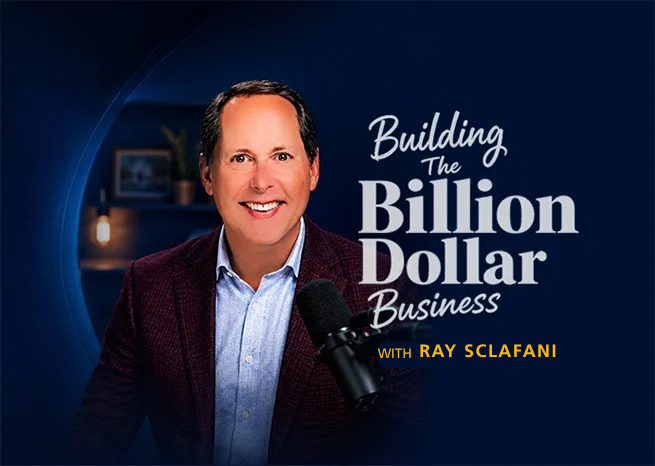
Episode #115
Succession Is No Longer a Future Event
Building the Billion Dollar Business with RAY SCLAFANI
EPISODES
EMPOWERMENT
INSIGHTS
Executive Summary
Ray Sclafani discusses why succession planning must become an everyday leadership discipline rather than an event triggered by retirement. The episode shares a practical four-part framework for identifying trust-bearing roles, naming successors, designing intentional transfer experiences, and reviewing bench strength quarterly. For advisory firm owners and leaders, succession readiness directly impacts enterprise value, client retention, and your ability to scale beyond your own capacity.
Ray references Cerule data showing 105,000 advisors retiring over the next decade while many firms lack the next generation to carry these relationships. By implementing systematic succession planning, firms reduce avoidable risk, protect client continuity, and create visible opportunities for emerging leaders.
Key Takeaways
Succession is a series of transfers of trust built through repeated experiences over time, not a transaction. A proper succession transition should take five to seven years depending on the strength of your bench and next generation leaders.
Identify trust-bearing roles by asking who holds important client relationships, who makes decisions clients rely on, and who understands family dynamics and generational transitions. Start with trust, not titles.
For each key role, name the likely successor, backup successor, and specific readiness gap (technical skill, executive presence, business judgment, or communication maturity). The readiness gap matters most.
Review bench strength every 90 days with your leadership team to address not just founder retirement but also illness, burnout, mobility, unexpected departures, acquisitions, and growth.
How a founder or controlling owner leaves signals to the entire firm what the culture truly values. When a senior leader is honored well, the firm sends the message that it respects contributions, plans thoughtfully, and develops people.
Transcript
Recently, I was having a coaching conversation with a very wise leader. He was an advisor, and we were having a conversation about succession planning at his firm. And we were stress testing a very simple four part framework. He said to me, Hey, Ray, this is really great. Before we begin, let me just make it really clear. My philosophy around succession is pretty simple. He said, I'm just simply the steward of our firm. For a very short period of time relative to our company's history. And my primary role is to make sure I leave the place better than I found it, prepare my colleagues to lead us into the future, and be certain we are connecting with the next generation of our clients. In other words, he was telling me that succession is an everyday event.
And in far too many advisory firms, succession is treated as an event. When someone nears retirement, the firm begins discussing valuation and payout terms, client transitions, titles and timing. Everyone tries to move pretty quickly and respectfully. The founder wants to protect clients. The team wants stability. The next generation wants clarity. And clients want to know who's going to take care of them. But real succession is not a transaction. It's a series of transfers of trust. And Mark Toberson once taught me that a proper succession transition should take at least five to seven years.
Now, depending upon the strength of your bench and your next generation leaders, that could shrink a little bit. If it's a family member that's worked with you for a long period of time or an employee who's been part of your firm for a decade or more, you've already begun the process. And you know, trust is not transferred in a memo or in a meeting or in some signed agreement. It's built through repeated experiences over time. And that's why succession has to begin years before it's needed.
Let me share a few numbers with you. These are not theoretical, they are facts. Cerule reports that 105,000 advisors plan to retire over the next decade, and that represents 37.4% of the industry headcount and 41.4% of the total assets. More than a quarter of the advisors expecting to retire within 10 years say they are unsure of their retirement plans. That number rises to 30% among independent RIA firms. So the problem is not only that advisors are aging, the real problem is that many firms have not developed enough people who are ready to carry the relationships, the leadership, and the judgment that clients have come to trust.
In fact, it probably takes somewhere between two and three professionals to replace a controlling owner or founder. And for an industry, succession pressure is accelerating. Next generation development, the building of bench strength, the development of written succession plans. So in today's short episode, I want to provide the short four-part framework that I was walking this wise advisor through. And whether you're really far along and you're well prepared or not, use this framework to double check how you're doing. Consider stress testing your own situation as I walk through each of these four parts. It'll only take a few minutes, but sometimes it's the simplicity that we're all really looking for.
Let me just run through these. Step One: Identify the Roles in Your Firm That Carry the Most Client Trust. I wouldn't start with titles, start with trust. Who holds the most important client relationships? Who makes the decisions that people rely on? Who calms clients when markets are down? Who understands the family dynamics, client by client, household by household? Who knows the next generation? The heirs who are going to inherit your client's wealth. Who knows the widow, the business owner, the trustee, and the adult children? In many firms, the answer is concentrated with a few people. Now that creates risk and it also limits growth.
Here's Step Two: Name the Successor for Each Trust Bearing Role. This does not mean the person's ready today. It means the firm is no longer pretending that we'll figure it out later as a strategy. For each key role, identify the likely successor, the backup successor, and the readiness gap. The readiness gap matters most. One person may have the technical skill, but lack executive presence. Another may have the client relationship, but lacks business judgment. Another may have the drive, but lack communication maturity. Name it specifically.
Here's Step Three: Build Transfer Experiences Before They're Needed. This is where many firms get it wrong. They introduce the next generation far too late, waiting for some triggering event. They bring someone into the room after the client has spent 20 years relying on the founder. Be double deep in your meetings. Bring a second chair, somebody who has not just a note-taking responsibility, but an advisory relationship where they're actually providing some advice and guidance. If you have client appreciation events or client education events or maybe just a fun golf event or taking somebody to a ball game, bring that next generation professional with you.
Be specific. This is not succession. If you're just rushing someone in late, you don't want that rushed handoff. You want it prepared, thoughtful. You want that relationship building over time. Transfer experiences should be intentionally designed. A next generation advisor can certainly lead a planning discussion. They can run the agenda. They can present the financial plan. They can follow up with the client. They can engage the spouse. They can host the next generation family meeting. They can even lead the annual review while the founder is still present and supportive. Again, put that second chair in an advisory relationship. The client needs to experience capability before transition. So I've said capability and advisory. But also relational. So think about both of those.
Here's the final part: Review Bench Strength Every 90 Days. A succession plan that sits in a file is not a plan. It's not what you file with the SEC. Now, those are all just comfort documents. The leadership team should review key roles, successors, readiness gaps, client exposure, and development priorities each and every 12 weeks. This is not only about founder retirement or controlling owner retirement. It's about illness, burnout, advisor mobility, unexpected departures, acquisitions, mergers, promotions, and growth. Bench strength protects the firm against those surprises.
There's also a cultural point here. How a founder or controlling owner leaves signals to the entire firm what the culture truly values. When a senior leader is honored well, the firm sends an important message. We respect contributions. We plan transitions thoughtfully. We protect clients. We develop people. We do not treat people as replacement parts. When succession is handled poorly, the message is just as clear.
For wealth management firms, this is personal. Clients do not just buy advice, they place their trust in human beings. That's not AI, that's human beings. That trust needs a path, a process, and preparation. Here's the real practical step: create a one-page succession map. List every key client facing and leadership role. Next to each role, include the successor, the backup, the readiness level, and the next development experience required, and then review that quarterly.
The firms that do this will not eliminate risk. No firm can do that. But they will reduce avoidable risk. They will protect client continuity. They will create a visible opportunity for the next generation. And they will make the business more transferable. Succession's not a future event, it's a leadership discipline. With each episode, we provide a few coaching questions. Always like leaving you with some reflection. So today I've got four. First, who inside your firm is learning how to carry client trust before they're asked to inherit it? Number two, which client relationships remain too dependent on one or a couple of people in your firm? Number three, what experiences must your next generation leaders have over the next 12 months? And number four, where does your succession plan exist in writing, and where does it still live only in someone's head? Hey, thanks for listening. Please like and share this episode with someone you know needs to hear it.
Questions Financial Advisory Firm Leaders and Team Members Often Ask
What's the difference between treating succession as an event versus a leadership discipline? +
Most advisory firms treat succession as an event triggered by retirement, focusing on valuation and payout in months. Real succession is a discipline built over five to seven years through intentional relationship building and systematic experience design. Succession is a series of transfers of trust, not a transaction.
How do I identify which roles in my firm need succession planning? +
Start with trust, not titles. Identify who holds the most important client relationships, who makes decisions clients rely on, who calms clients during market downturns, and who understands family dynamics. In many firms, this trust is concentrated with a few people, which creates both risk and growth limitations.
What is a "second chair" transfer experience? +
Performance conversations become subjective without specific language, and generic feedback rarely changes behavior. When you define meeting, exceeding, and far exceeding for each role, managers have clear language to coach toward the next level. Team members can see what growth looks like and aim for it with confidence. This is a clarity problem before it becomes a performance problem.
Why should I review my succession plan every 90 days? +
Quarterly reviews ensure your plan addresses not just founder retirement but also illness, burnout, advisor mobility, acquisitions, and growth. A succession plan sitting in a file is not a real plan. Regular reviews reduce avoidable risk and protect client continuity.
How many people does it take to replace a controlling owner or founder? +
It typically takes somewhere between two and three professionals to replace a controlling owner or founder. This is why building bench strength and developing multiple next generation leaders is essential for firm continuity.
Build Your Succession Leadership Discipline
Succession readiness determines your firm's enterprise value, growth potential, and client continuity. Work with ClientWise to develop your bench strength, design transfer experiences, and create a written succession plan that protects clients and prepares your next generation. Let's design a succession strategy built for your firm's future.
Connect With ClientWise