
 Search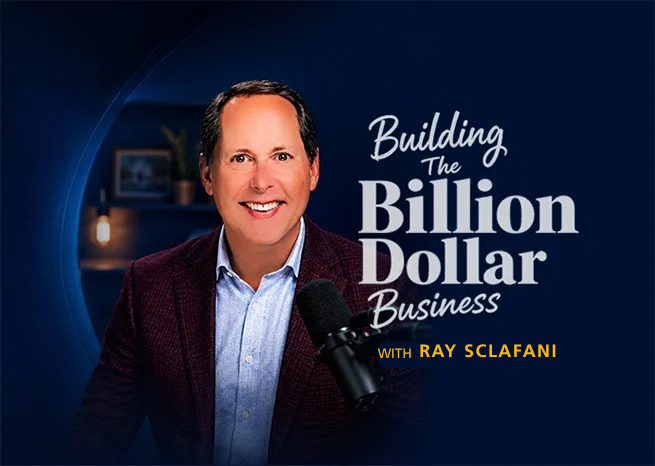
Episode #122
The Next Generation Is Asking A Better Question
Building the Billion Dollar Business with RAY SCLAFANI
EPISODES
EMPOWERMENT
INSIGHTS
Executive Summary
Why Next Generation Talent Is Different
The next generation of financial advisors and wealth management professionals isn't rejecting ambition—they're rejecting vague ambition.
Ray Sclafani examines the critical distinction that's reshaping how elite advisory firms must approach talent development and retention. Rather than assume younger professionals lack drive, forward-thinking leaders are discovering they're asking better questions: What am I becoming here?
With Gen Z and millennials comprising 74% of the global workforce by 2030, firms that make career paths, development plans, and professional identity visible will win the talent war. This episode cuts through generational stereotypes to show advisory firm owners exactly how to structure conversations and career experiences that turn next generation talent into committed long-term partners.
Key Takeaways
Next generation talent rejects vague ambition, not ambition itself. They want clear visibility into how they can grow, what they can become, and who will develop them within your firm.
Learning and development rank as the top criteria for employer selection. 89% of Gen Z employees want purpose-driven work, and 59% say AI skills are required for career advancement—compensation and flexibility alone won't retain them.
Identity matters more than just titles. An associate advisor needs to know if they're becoming a lead advisor, planner, business developer, or partner. Vague answers create quiet exits.
Use the five-question conversation framework. Ask: What are you learning? Who is developing you? Where can you go here? How does your work matter? How will AI change your role?
Document the next experience, not the next title. Growth happens through structured experiences like leading client meetings, running planning cases, mentoring, and sitting in business development conversations.
Address AI directly in career conversations. 100% of advisory teams have at least one person concerned about AI impact. Leaders must show how the role becomes more valuable, not less.
Transcript
Well, I'm excited about today's episode because it's all about next generation talent who is not rejecting ambition. They are rejecting vague ambition instead. What do I mean by that? There's an important distinction here I want you to recognize. It is easy for senior leaders to misread younger talent. They hear different questions and assume less commitment. They see a different relationship to work and assume less drive. They see impatience and assume entitlement.
Well, that's too simple. The next generation is not asking only what is the JOB? They are asking, what am I becoming here? That is the question many firms are unprepared to answer. Here's some interesting statistics to consider. The next generation views work differently. I think we all kind of accept and know that. Deloitte's 2025 Global Gen Z and Millennial Study.
Which included over twenty three thousand four hundred and eighty-two respondents across forty four countries, indicates that Gen Z and millennials will make up seventy-four percent of the global workforce by twenty thirty. It also highlights that only six percent of Gen Z and millennial respondents say their primary career goal is to reach a leadership position, and that learning and development are the top criteria for choosing an employer.
89% of Gen Z employees say they want purpose-driven work, and 59% say AI skills are required for career advancement. And they're seeking a mix of money, meaning, and well-being while building technical and human skills for the future. For advisory firms, this changes the conversation about talent. The old bargain was often unspoken. Work hard, learn by watching, be patient. Opportunities will come. Well, that may work for some people, it will no longer work as a full talent strategy.
The next generation wants the future made visible, not guaranteed, just visible. And there's a difference. A visible future outlines: here's how you grow. Here is what you need to learn. Here is who will develop you. Here is how your role can expand. Here is how compensation can change. Here is what leadership looks like here. Here is client trust being transferred. Here is how AI will reshape your work. Here is how your contribution connects to the nobility of the work we do helping clients and families. That's not coddling people, it's leading them.
This is where firms need a clearer frame. The next generation is looking for more than just flexibility, compensation, and title progression. Those matter, but the deeper issue is identity. They're trying to understand the kind of professional that they can become within your firm. An associate advisor wants to know whether they're becoming a lead advisor or a planner or a business developer, a relationship manager, a partner, or a permanent support person. A client service professional wants to know whether the firm views them as administrative support or as a future operations leader. A young manager may want to know whether the leadership team means authority, service, ownership, or all three.
A prospective partner wants to know whether ownership is real, symbolic, financial, cultural, or unavailable. Vague answers create quiet exits. Here's the actionable idea. Create a future conversation with every high potential next generation employee. This is not an annual review or a compensation negotiation. It's a structured conversation about direction. The conversation should have five questions. First, what are you learning here?
This matters because learning is now a retention lever. If a person is busy but not growing, the firm's draining their energy without expanding their future. Second, who do you see as developing you? Development cannot be left to osmosis. Someone has to own it, and that may be a manager, a mentor, coach, advisor, partner, or team leader, and the person has to know who is paying attention. Third, where do you believe you can go in this firm?
And this requires brutal honesty. A firm should not promise what it cannot deliver, but it should be able to describe possible career paths, client advice, planning, operations, leadership, business development, team management, partnership, enterprise roles. If the path is limited, say so. If the path is expanding, show how. Fourth, how do you believe your work matters? Younger professionals want to connect their work to meaning. In what in wealth management, this should not be difficult. The work matters because families make decisions with real consequences. Business owners transition their companies. Surviving spouses need confidence. Children inherit both assets and responsibility. Clients make choices about retirement, philanthropic decisions, risk, legacy, and care.
I saw an advisor do something really brilliant. He invited all of the next gen professionals on his team to once a month they got to pick a client and they rotated, a client that they believe they had a major impact in helping and invite them to the monthly team meeting so the client could share with the entire team exactly the impact they had made. That's an example of connecting the how does your work matter to the actual client and the work that has changed for them. Fifth, how will AI change your role and how will we help you grow with it? That's an important question, especially as AI accelerates here. The question is new and it's important. And people hear about automation. They hear about AI meeting notes and planning tools.
I just recently surveyed a group of our clients, those we're coaching, and asked how many of you have team members that are concerned about AI replacing their role or squeezing the budget in some way where they might be moved out of the company. And to a person, we have seen a hundred percent response rate. Most teams have somebody who's concerned about AI making an impact. So bring it forward and raise it. Leaders want to answer leaders need to answer these questions directly and and have a conversation, a one that's truly collaborative.
AI is gonna probably reduce some routine work, but it can also heighten the importance of the communication and empathy, the quality control, client understanding, planning, insight, and judgment. Your firm should have people. Your firm should show people how you're going to train them to move up the value chain. Here's our practical, actionable next step. Ask every manager to schedule one conversation with each direct report within the next 60 to 90 days. Use a simple agenda. Where are you now? What are you learning? Where do you want to grow? What experiences do you need next? And how can our firm help support that next step? Document the next experience, not the next title.
The next experience. Maybe the person needs a lead part of a client meeting. Maybe they need to run a planning case. Maybe they need to mentor someone newer. Maybe they need to present at a team meeting. Maybe they need to shadow a senior advisor or they just need some more AI training. Maybe they need to sit on a business development conversation. Growth happens through experience, not just slogans. Your future firm will win next generation talent by making growth visible development intentional and purpose real.
With each episode, we include a few coaching questions. Here are a few for you to consider. One, how will your next generation talent see a future in your firm that is clear enough they want to be a part of it? Two, where are you assigning them to work but not developing them? Three, what leadership opportunities can your next generation leaders gain before they receive the leadership title? And how will AI make their future role more valuable, not less?
Hey, thanks for listening. Please like and share this episode with someone you know needs to hear it.
Questions Financial Advisory Firm Leaders and Team Members Often Ask
How do I retain next generation talent in my advisory firm? +
Create structured future conversations with each high-potential younger employee. Use the five-question framework:
1. What are you learning?
2. Who is developing you?
3. Where can you go here?
4. How does your work matter?
5. How will AI change your role?
Document the next experience they need, not just the next title. Make career paths visible by outlining clear progression opportunities across client advisory, planning, operations, business development, leadership, and partnership tracks.
What does Gen Z actually want from an employer? +
According to Deloitte's 2025 Global Gen Z and Millennial Study, 89% want purpose-driven work, learning and development are the top criteria for choosing an employer, and 59% say AI skills are required for career advancement. They're seeking a mix of money, meaning, and well-being while building technical and human skills for the future. Only 6% list leadership position as their primary career goal, signaling they care more about growth and development than traditional advancement.
How should I address AI concerns with younger team members? +
Bring it forward directly in career conversations. 100% of advisory teams have at least one person concerned about AI impact on their role. Don't avoid the topic—show how AI will reduce routine work while heightening the importance of communication, empathy, quality control, client understanding, planning, insight, and judgment. Commit to training them to move up the value chain, not sideways or out.
What is the difference between a visible future and a guaranteed one? +
A visible future outlines how growth works: here's how you grow, what you need to learn, who will develop you, how your role expands, how compensation changes, what leadership looks like, how client trust transfers, and how AI will reshape your work. It doesn't guarantee outcomes—it shows the pathway. This clarity is what next generation talent is actually seeking when they ask, "What am I becoming here?"
Why does identity matter more than compensation in retention? +
Build the Talent Strategy Your Firm Deserves
Turn next generation talent into committed long-term partners. Learn how to structure conversations, make growth visible, and address AI head-on.
Connect With ClientWise