
 Search
Episode #132
Grit Built Your Practice, Your Inner Circle Helps Build Your Firm
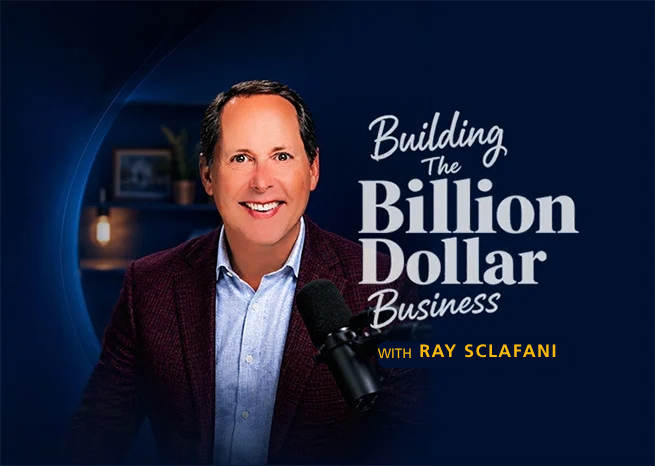
Building the Billion Dollar Business with RAY SCLAFANI
EPISODES
EMPOWERMENT
INSIGHTS
Executive Summary
Why the People Around You Shape the Firm You Build
In this episode of Building the Billion Dollar Business, Ray Sclafani, Founder and CEO of ClientWise, explores why the grit that built your practice works best alongside an inner circle you choose on purpose. Drawing on Angela Duckworth’s new book, Situated, Ray shares three insights on how your situation, your peers, and the closeness of your mentors shape what you believe is possible for your business. He explains why so many advisors become accidental owners and how bringing the right people into the conversation raises the ceiling on their thinking. Firm leaders will leave with a clear next step: audit their situation and build an inner circle that strengthens leadership, accelerates growth, and builds lasting enterprise value.
Key Takeaways
Grit is necessary, and it works best with the right situation. Angela Duckworth, the psychologist who made grit famous, now concludes that how you situate yourself matters just as much as effort.
Many firm leaders are accidental owners. They became advisors because they loved helping people. Success then made them responsible for payroll, a team, technology, compliance, and a growth plan that lives mostly in their head.
Change the situation upstream. A situation shapes your thoughts, and your thoughts shape your response. When you change who is in the conversation, you change the conversation itself.
Your peers define what feels normal. When the advisors around you build real businesses with clear roles, documented processes, and succession plans, that becomes your normal, and normal is what you actually do.
The strongest peer relationships run both ways. Great peers hold each other accountable and bring knowledge the others lack, and some of them depend on you.
Build your inner circle on purpose. A study group, a local FPA chapter, an in-person academy, or a monthly breakfast with fellow advisors can all work. What matters is choosing your circle deliberately.
Transcript
While grit built your practice, it won’t build your firm. The psychologist who made grit famous now says effort alone is just not enough. What matters as much is who you surround yourself with. So let me ask one simple question. Who’s in your inner circle?
Now, I don’t mean your clients or your team or your followers. I mean the handful of people who shape what you believe is possible for your business, the people who tell you the truth when you need to hear it, the people who expect more of you than sometimes you expect of yourself.
Here’s the thing. For most of us, that circle was never chosen. It just kind of formed. In my experience, most advisors never set out to own a business. They became advisors because they love helping people. They were good at it, and clients trusted them. And then one day they wake up running a firm. There’s payroll to make, a team to lead, a technology stack, compliance, and a growth plan that lives mostly in their head.
I call this being an accidental owner, the unintended consequence of success. And accidental owners tend to repeat one singular mistake. They try to solve business problems all alone. They read more, they work later, and they white-knuckle it.
There’s a new book out this fall that explains why that approach so often stalls. Angela Duckworth is the psychologist who gave us the book Grit, that blend of passion and perseverance. Her new book came out this past September. It’s called Situated: Find the People and Places That Bring Out Your Best. What I find striking is that it’s a bit of a course correction on her own famous idea. Her conclusion now is that while grit is necessary, it’s often not sufficient. How you situate yourself matters just as much.
She organizes the book around four key elements: your space, your peers, your mentors, and your culture. I want to share three insights every advisor and firm leader should take from this.
Duckworth’s model is simple: a situation shapes your thoughts, and your thoughts shape your response. Most of us try to fix the response. Try harder, be more disciplined, set another goal. But when you change the situation upstream, everything downstream changes with it. She’s candid in the book about her own burnout and about how changing her situation, rather than changing herself, is what finally made the difference.
Now apply that to your firm. If every strategic conversation you have is with yourself at 10 o’clock at night, your ceiling is your own thinking. Change who’s in the conversation and you change the conversation.
Duckworth calls her second element pick your peers. In the book, there’s a short self-assessment she calls the Situated Scorecard. Three of the questions are about peers, and I want you to answer them honestly. Do you have peers who hold you accountable to your goals, and do you do the same for them? Do your peers know things you don’t, so that together you’re smarter than you are alone? And do you have peers who depend on you?
Notice this last question. It isn’t only about what you get. It’s about being needed. That’s what real peer-to-peer learning is all about: lifting each other up.
Here’s why it matters so much. Your peers define what feels normal. When the advisors around you are building real businesses with clear roles, documented processes, and real succession plans, that becomes normal. And what feels normal is what you’ll actually do. That’s the real power behind what our industry calls study groups or mastermind groups. It isn’t the meeting. It’s the new normal the meeting creates.
The third insight is about closeness. Duckworth makes the point that a situation’s influence on you depends on how near it is: the objects within arm’s reach, the people you actually spend time with. A mentor you watch on a webinar once a year shapes you less than the one who sits across the table and asks the tough question. As she puts it in a recent interview, the evidence from behavioral science says people do better together.
She also describes how to attract the right mentors. Show up prepared. Be curious. Be coachable. Be grateful. That’s not a personality type. It’s a set of choices any of us can make.
We live in the most connected era in history. Think about it for a moment. It’s also the most digitally saturated. We scroll past hundreds of highlight reels a week, and yet so many firm owners will tell you privately that it’s lonely at the top.
Michael Kitces has a front-row seat to this. He speaks at dozens of advisor conferences every year, and his observation is telling. Conferences can no longer survive on content alone, because the content is available online. The events that thrive now are built around community, around experience, around being in the room together. And advisors are voting with their feet. In-person industry events have made a strong comeback. You don’t fly across the country for a slide deck. You fly for the hallway conversation, the dinner, the peer who says, “Here’s how we solved that.”
Kitces just released his list of the best financial advisor conferences for 2027. We’ll put the full list in the show notes.
So what do you do with all this? Start the way Duckworth would. Audit your situation. Who are your peers? Who are your mentors? What culture are you choosing to stand in?
I’ll share something personal here. Next month, our team will be in New York for the ThinkAdvisor Luminaries Awards. I’m humbled to be a finalist for Thought Leader of the Year, and our Business Builders Academy is a finalist in the advisor education innovation category. I don’t share this just to talk about us. I mention it because it proves today’s point. Thought leadership is never a solo endeavor. Every idea I’ve ever shared on this show was sharpened by advisors, colleagues, and people willing to challenge my thinking, including Michael Kitces and countless others.
The ClientWise Business Builders Academy works for exactly the reason Duckworth describes: advisors who become owners, learning from each other in person, alongside people working through similar challenges. All the recognition belongs to them.
Whether it’s that, a study group, your local FPA chapter, or three advisors who meet for breakfast once a month, the principle is the same. Stop leaving your inner circle to chance. Build it on purpose. Surround yourself with the people who set you up for success, and make sure you’re doing the same for them.
I’ll leave you with three coaching questions to think about this week.
First, a year from now, who do you want in your inner circle, and what will you need to do between now and then to earn your place among them?
Second, if your peers define what normal looks like for your business, what would you want normal to look like by the end of next year?
Third, what is the one part of your situation you could change in the next 90 days that would make your goals easier to reach than willpower ever could?
If this episode made you think of someone, an advisor, a partner, or a friend who’s building something on their own, please send this to them. That one share might be the start of their inner circle.
And if it gave you something to think about today, take ten seconds to hit follow, leave a like, and rate the show five stars. It’s the simplest way to help more advisors find these conversations.
Questions Financial Advisory Firm Leaders and Team Members Often Ask
Why isn’t grit enough to build an advisory firm? +
Angela Duckworth, the psychologist who made grit famous, now concludes that grit is necessary but often not sufficient. In her book Situated, she argues that how you situate yourself matters just as much: your space, peers, mentors, and culture. Ray Sclafani applies this to advisory firms. Effort built the practice, and the people around you shape how far the firm can grow.
What is an accidental owner in financial advice? +
An accidental owner is an advisor who never set out to own a business. They became an advisor because they loved helping people, and success eventually left them running a firm with payroll, a team, technology, compliance, and a growth plan that lives mostly in their head. Ray notes that accidental owners often try to solve business problems alone.
How do peer groups help financial advisors grow their firms? +
What questions should advisors ask to evaluate their peer group? +
Ray highlights three peer questions from Duckworth’s Situated Scorecard. First, do you have peers who hold you accountable to your goals, and do you do the same for them? Second, do your peers know things you don’t? Third, do you have peers who depend on you?
How can firm leaders attract the right mentors? +
Build an Inner Circle That Elevates Your Firm
The strongest firm leaders choose who sharpens their thinking. A ClientWise coaching partnership gives advisory firm owners a credentialed coach, structured accountability, and peers working through similar challenges. Together, we’ll design the next stage of your firm.
Connect With ClientWise