
 Search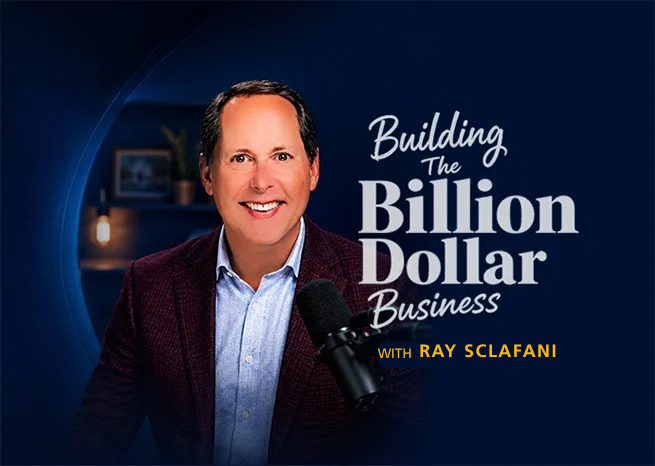
Episode #119
Culture is What the Firm Allows
Building the Billion Dollar Business with RAY SCLAFANI
EPISODES
EMPOWERMENT
INSIGHTS
Executive Summary
Culture Revealed Through Behavior, Not Words
Ray Sclafani explores how firm culture is authentically revealed through the behaviors leaders reward, tolerate, and ignore, not through the values statements posted on office walls.
Drawing on research from the Society for Human Resource Management showing that employee experience and engagement account for 42% of turnover intent, Ray presents a practical five-question culture evidence review process.
For advisory firm owners, understanding the real culture has direct business impact: internal culture becomes external client experience.
This episode translates culture from sentiment to measurable evidence, connecting daily behavioral patterns to enterprise value, retention, and client relationships.
Key Takeaways
Culture is not what leaders proclaim at offsites. Instead, it's revealed in what the firm permits on a typical Monday morning. The real culture is what gets repeated, rewarded, ignored, or excused because someone generates revenue.
Employee experience and engagement account for 42% of turnover intent, according to SHRM's 2025 State of the Workplace research. This connects culture directly to retention and firm stability.
Run a culture evidence review using five practical questions: What behaviors are rewarded? What behaviors are tolerated? What do employees fear saying? What are stay interviews telling us? How is AI anxiety manifesting in the culture?
Tolerated behaviors become permission. Every firm tolerates something—poor follow-through, weak meetings, avoided feedback, hoarded clients, not using the CRM. Leaders need to examine what they're inadvertently endorsing.
Stay interviews are often more valuable than exit interviews because they occur before someone leaves. Ask people why they stay, what might cause them to leave, and what would make their work more meaningful.
In relational work like financial advisory, clients feel the culture even when they don't name it. They feel when teams are aligned, when communication is clear, when people are tired, and when turnover disrupts continuity.
Transcript
So much about culture. Culture, culture, culture. You know, culture is not what leaders proclaim at off site meetings. It's revealed in what the firm permits on a typical Monday morning. That's the test. Most firms have clear values, you know, respect, integrity, service, excellence, collaboration, growth, client focus. All those words really matter. But if they but only if they show up in behavior. The real culture is what gets repeated. It's what gets rewarded, and it is what gets ignored. It's what gets excused because someone generates revenue. It's what people stop reporting because nothing ever changes around here. It's what new employees learn by watching who gets promoted, who gets protected, who gets challenged, and who gets a pass. That is why culture has to be examined through evidence, not through language.
At ClientWise, we offer this talent strategy operating system and it covers ten integrated parts. One of the parts is this employee engagement and culture. Does your firm regularly measure how satisfied and engaged your employees are? Do leaders understand which behaviors strengthen or weaken the culture? Does the firm know how employees view their relationship with leadership and managers? Are leaders aware of how employees feel about AI's impact on their roles and their future? And does the firm track regrettable attrition—those employees you don't want to lose—using stay and exit interviews to learn from departures. Those questions are practical because they move culture from sentiment to evidence. SHRM, the Society for Human Resource Management, in their 2025 State of the Workplace Research, found that employee experience and engagement account for 42% of turnover intent. Now that's a useful number because it connects culture to retention. Culture is not decoration. It affects the decision to stay or leave. For advisory firms like yours, culture is especially important because the work is relational. Clients feel the culture. They may not name it, but they feel it. They feel when a team is aligned, they feel when communication is clear. They feel when advisor trusts the service team. They feel when turnover disrupts continuity. They feel when people are tired. They feel when the left hand does not know what the right hand's doing. Internal culture becomes external client experience.
Here's the actionable idea: Run a culture evidence review. This is not an employee happiness survey alone. It's a leadership review of what the firm's culture actually produces. I would start with five questions.
First, what behaviors are rewarded around here? Look past the value statement. Who gets promoted and why? Who gets praised? Who gets paid? Who gets invited to important conversations? Is it the person who develops others or only the person who generates revenue? Is it the person who collaborates or the person who controls information? Is it the person who improves the system or the person who saves the day after the system fails? Rewards reveal culture.
Second, what behaviors are tolerated? Now, this may be the most important question, and oftentimes firms don't think about it. Every firm tolerates something. Poor follow-through, weak meetings, avoided feedback, disrespectful communication, hoarded clients, undermining peers, overserved select clients, not using the CRM, refusing to delegate, treating staff as support instead of colleagues. When leaders tolerate, what leaders tolerate becomes permission.
Third, what do employees fear saying out loud? Now this question requires a little bit of courage. Employees may know where the firm is stuck before leaders admit it. They may know which manager is weak, which process is broken, which client segment is draining the team, which advisor is difficult to work with, which promises are not credible, and which strategy is not aligned with capacity. A healthy culture gives truth a place to go.
Fourth, what are the stay interviews telling us? Now stay interviews are often more valuable than the exit interview because they occur before someone leaves, that seems obvious. Ask people why they stay. What might cause them to leave? And what would make their work more meaningful? Where do they feel underutilized? Where do they feel under supported? And what would help them grow? If your very best people are giving you signals, listen early.
Fifth, what is AI anxiety doing to the culture? This is a new one. Employees may not say it directly—'I'm anxious about the AI.' They may say, 'Well, I'm not sure where my role is headed.' They may hesitate to use tools or to use them secretly. They may fear being replaced. They may assume productivity gains will only mean more work. Leaders need to bring that into the open.
Culture changes when leadership changes what it rewards, what it tolerates, what it measures, and what it models. The future firm will not rely solely on values language. It will build a culture that people can actually feel in their daily work.
Questions Financial Advisory Firm Leaders and Team Members Often Ask
What's the difference between stated values and actual culture? +
Stated values are what firms proclaim at offsites—respect, integrity, service, excellence. Actual culture is revealed in what gets repeated, rewarded, ignored, or excused. New employees learn the real culture by watching who gets promoted, who gets protected, who gets challenged, and who gets a pass.
How does culture directly connect to turnover? +
According to SHRM's 2025 State of the Workplace research, employee experience and engagement account for 42% of turnover intent. Culture affects the decision to stay or leave, making it a measurable business metric, not just a nice-to-have.
Why are stay interviews more valuable than exit interviews? +
Stay interviews occur before someone leaves, giving leaders the chance to listen early and take action. Ask people why they stay, what might cause them to leave, where they feel underutilized or unsupported, and what would help them grow. Exit interviews deliver the lesson too late to retain your best people.
How does internal culture show up in client experience? +
In relational work like financial advisory, clients feel the culture even when they don't name it. They feel when teams are aligned, when communication is clear, when advisors trust service teams, when people are tired, and when turnover disrupts continuity. Internal culture becomes external client experience.
Build the Culture That Keeps Your Best People
Culture is not decoration. It's a measurable driver of retention, client experience, and firm value. ClientWise executive coaching helps you move from values language to behavioral reality. Our evidence-based culture assessment identifies the gaps between what you proclaim and what you actually permit, so you can align leadership decisions with the culture you intend to build.
Connect With ClientWise