
 Search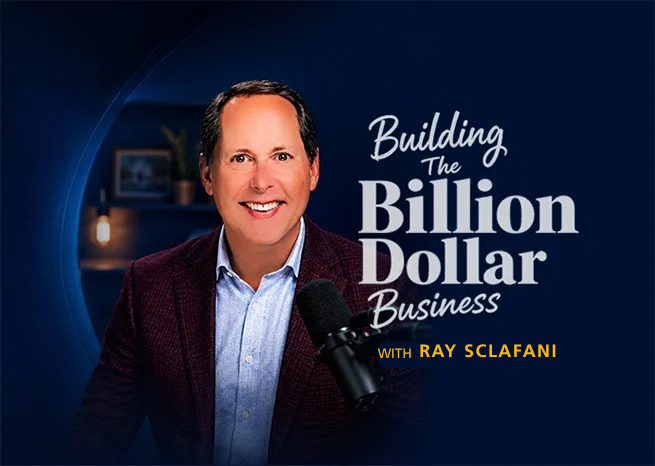
Episode #124
Career Paths are Becoming Design Work
Building the Billion Dollar Business with RAY SCLAFANI
EPISODES
EMPOWERMENT
INSIGHTS
Executive Summary
Ray Sclafani, Founder and CEO of ClientWise, emphasizes that career pathing is one of the most overlooked levers for enterprise value in advisory firms. Ray makes the case that avoiding career conversations out of fear of over-promising is costing firms their best people, while a structured approach built on skills, experience, and contribution builds both retention and leadership bench strength. Drawing on Schwab's 2025 Advisor Services research, Ray shows that career pathing has shifted from a nice-to-have to a market expectation. He also addresses how AI is redefining the value of nearly every role in a firm, from associate advisor to operations manager. For firm owners focused on succession and long-term growth, this episode offers a practical framework for turning role design into a genuine leadership tool.
Key Takeaways
Career pathing is not a promise of promotion. It is a growth map that builds trust and improves retention.
Firms that avoid career conversations out of fear of over-promising pay a real cost in lost talent.
Schwab's 2025 research found that 77% of firms offer career pathing and 67% offer coaching and mentorship, making it a market expectation rather than a bonus.
A simple one page, six section career path document can make growth visible and credible for any role in the firm.
Transcript
Ray Sclafani (00:00.78)
Having larger conversations with team members about their career path is not a promise or a promotion. It's simply a map of growth and a guarantee you're going to have a higher probability of retaining top talent than losing them to the competition. Some firms avoid having this career pathing conversation because they're afraid of making promises about the future. They worry that if they show someone a path, the employee will expect a title, compensation change, equity in the firm, and
or a leadership role before they might be ready. And that fear is pretty understandable, but it's costly. The answer is not to avoid having career path conversations. The answer is how to design them honestly, how to co-create a plan for the future, how to have that conversation where you and the team member are both aligned around their skills, competencies and experiences and that they're ready for the next role. A career path should not be you're guaranteed this role. It should be more like
Here's what growth looks like here. Here are the skills that'll be required, the experiences that you need to obtain in order to move effectively into that role. Here's how responsibility will expand, and here's how client trust is earned. Here's how leadership is demonstrated, and here's how AI will change the nature of the work. Here's what must be true about the next step. That's an honest conversation. That's an open, future focused conversation that's very powerful. The kind of clarity that
that we're talking about here doesn't create entitlement, it actually creates maturity. At ClientWise, we've developed a 10 part interlocking talent strategy operating system. And one of the key parts is the professional development career pathing part. And there are some self-assessment questions that I want to share with you that are very practical. Number one, does each employee have an individual professional development objective or a plan that's written?
Are career path possibilities discussed during development conversations and do employees understand what future opportunities exist within the firm? Do we help employees understand how their roles will evolve, how AI capability expands, and are we identifying and actively developing next generation leaders? Now Schwab's advisor services twenty twenty five research sound.
Ray Sclafani (02:25.087)
Schwab's Advisor Services 2025 research found that 77% of firms offer career pathing opportunities and 67% offer coaching and mentorship programs. Now, this is important because 10 years ago that was just not the case. The case in the past was always hey, trust me, it'll work out. Trust me, you've got a big future around here. Keep doing what you're doing. Well, that doesn't work for the talent in the marketplace today. Career pathing has become simply
A market expectation. It's not only about younger employees too. It's about the architecture of your firm. As your firm grows, as your firm grows, roles will have to become more defined. Associate advisor, lead advisor, senior advisor, partner planning specialist, client service associate, operations manager, all of these roles will continue to evolve and they can't be held together by personality and memory. They need structure. And here's the actionable idea for today.
Build career paths around skills, experiences, and contribution. Now start with skills. Every role should have technical skills, relational skills, judgment skills, communication skills. For each associate advisor, the technical skills may include planning software, investment fundamentals, tax awareness, estate planning basics, and meeting prep. Relational skills may include listening, follow up, client empathy, and confidence.
Judgment skills may include knowing when to escalate, how to frame trade-offs, how to recognize risk. And that's just an example for an associate advisor. Do that with each role within your firm. Then define experiences. People do not grow only by reading role descriptions. They grow by doing harder things with support. A future lead advisor needs to lead parts of a client meeting. A future manager needs to coach somebody. A future partner needs to
needs to understand the economics, growth, client retention, leadership, and enterprise value of your firm. A future operations leader needs to redesign a process, not just follow one. Experience is the bridge between potential and readiness. Now comes contribution. This is where career paths become adult conversations. A larger role should require a larger contribution. That may include client impact, team leadership, business development,
Ray Sclafani (04:51.095)
Improvement, mentoring, decision quality, culture, or innovation. Promotion should not be based upon tenure. It should be based upon evidence. And specifically here around contribution, contribution in their current role should really count. Is the star performer far exceeding or exceeding expectations? Or are they not exceeding expectations but are looking for a different role? That's kind of a different conversation. If they're bored in their current role,
And they don't want to necessarily do the work to move to the next level or don't have the skills or experiences to move to the next level or a different level. It's a conversation that belongs in every career path conversation. A role that exists today may not look the same in three years. The employee needs to know how the firm sees the roles in your organization evolving and changing. Let me give you an example here. If AI can summarize meetings,
Well, the associate advisor's value may shift toward better questions, better analysis, better client insight, and stronger follow through. Because I hear many associates doing the job of sitting in meeting and taking notes and that's how they learn. Well, that's gone away. If AI can help draft client communications, the human value shifts to judgment, tone, personalization, and appropriateness. That means we've got to train to that. If AI can support an organi if AI can organize data.
The advisor's value shifts to interpretation and advice. The career path should show how the person moves up the value chain. Corn Fairy's Workforce 2025 research found that 67% of employees would stay with a company that offers real opportunities to grow, even if they don't love their current role. That's a striking point. Growth opportunity can hold people even when the current role is imperfect. For advisory firms,
This is important because not every role is glamorous every day. Client service can be repetitive, planning work can be detailed, operations can be relentless, business development. Business development can be uncomfortable and management can be messy. People will tolerate hard work when they can see what it is building. Here's a practical move. Pick one role in your firm and build a one page career path. Use six sections. Current role, purpose,
Ray Sclafani (07:11.978)
Next role options, skills required, experience is required, evidence of readiness, and AI capabilities needed. That's it. Six columns, couple of bullet points in each column, and you're on your way to building a bit of a career path together. Test it with someone in that role. Ask if the path looks clear, credible, motivating. The answer will tell you more than a leadership team debate. Career pathing is not about promising anything.
everyone a bigger title, it's about making growth visible enough that serious people can make serious commitments. The firms that do this well will keep more high potential talent. They will promote better, more effectively. They're going reduce confusion and they will certainly develop leaders before the firm needs them. The future belongs to firms that design growth instead of hoping people figure it out. With each episode we provide a few coaching questions for reflection. Today I've got a few. First,
Where do employees have a job description but no growth map? Two, what experiences should become required before someone moves into a larger role? And number three, how will AI change the skills required for each career path in your firm? With every episode, we Thanks for listening. Please share this episode with someone you know needs to hear it.
Questions Financial Advisory Firm Leaders and Team Members Often Ask
What is career pathing and why does it matter for financial advisory firms? +
Career pathing is a map of growth, not a promise of promotion or title. Ray explains that it gives employees and firm leaders shared clarity on skills, experience, and readiness needed for the next role, which increases the probability of retaining top talent.
How many financial advisory firms currently offer career pathing programs? +
Schwab's Advisor Services 2025 research found that 77% of firms offer career pathing opportunities and 67% offer coaching and mentorship programs. Ray notes this has become a market expectation rather than a competitive advantage.
What are the three components of an effective career path? +
Ray outlines skills, experience, and contribution as the three building blocks. Skills come first, covering technical, relational, judgment, and communication ability. Experience bridges potential and readiness, and contribution is the evidence based case for promotion.
How is AI changing the skills advisory teams need? +
As AI takes over meeting summaries, drafting client communications, and organizing data, Ray says the human value shifts toward better questions, judgment, tone, personalization, and interpretation. Career paths need to be updated to train toward those shifted skills.
How can a firm build a career path for a role quickly? +
Is Your Firm Designing Career Paths, or Just Hoping People Figure It Out?
ClientWise helps advisory firm leaders build skills based career paths that retain talent and prepare the next generation of leadership.
Connect With ClientWise