
 Search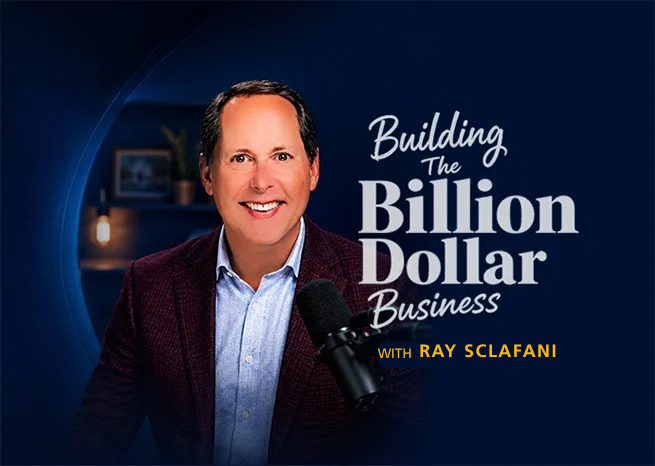
Episode #118
AI Is Now A Talent Strategy Issue
Building the Billion Dollar Business with RAY SCLAFANI
EPISODES
EMPOWERMENT
INSIGHTS
Executive Summary
Why AI Belongs on Your Talent Agenda, Not Just Your Tech Roadmap
Ray Sclafani, Founder and CEO of ClientWise, makes the case that AI is not primarily a technology decision for advisory firms, it is a talent strategy decision.
Ray argues that firms who frame AI purely around vendor selection and platform integration are asking the wrong questions, while the firms who will pull ahead are the ones asking what AI does to the work itself.
This episode connects AI adoption directly to hiring, development, performance standards, and career pathing for advisors and staff. Ray offers a practical quarterly discipline, six standing questions, that turns AI from a scattered experiment into a leadership-owned growth advantage.
For firm owners building enterprise value, this episode reframes AI readiness as a direct driver of team development and client trust.
Key Takeaways
AI is changing the work firms hire for, train for, measure, and value, which means it cannot be treated as a software decision alone.
The better executive question is not which tool to buy, it is what AI will do to the work and what talent strategy the firm will need as a result.
AI will reshape hiring, development, performance expectations, career paths, and leadership itself, requiring firms to build new ways for people to develop judgment rather than just produce output.
Managers will need to inspect AI-enabled work more closely, coach responsible use, and elevate the role of human judgment.
Ray recommends making AI a standing talent agenda item for the executive team every twelve weeks, asking six specific questions about roles, tasks, skills, usage, and risk.
Firms will win by redesigning work and developing people differently, not simply by buying more tools.
Transcript
Ray Sclafani (00:01.066)
AI is not just changing the tools advisors use, it is changing the work the firm hires for, trains for, measures and values. And that is why AI cannot be limited to technology alone. Let me explain. If AI is treated as a software decision, the firm's gonna be asking all the wrong questions. Which tools should we buy? Which vendor is best? Which meeting note system works? Which platform integrates with CRM? Well, those questions matter, but that's missing the point.
The better executive question is this. What will AI do to the work and what talent strategy will our firm need as a result? Now that puts AI right where it belongs inside the enterprise conversation. AI will affect AI will affect your hiring, and your firm may need fewer people to handle repetitive documentation and more people who can review, interpret, personalize, and apply output with better judgment.
AI will affect development. People will need to learn to prompt and review and edit and question and apply and reject some of the AI output. And AI will affect performance. If routine work speeds up, expectations should rise. But speed cannot mean carelessness. Quality, accuracy, compliance, tone, and judgment will still matter and maybe even more so. AI will also affect career paths. Some early career professionals learned that
By doing routine work that AI may now reduce. AI will also affect career paths. Some early career professionals learned by doing routine work that AI may now reduce. I had an executive share with me this week that, like the second and third chair sitting and meetings taking notes, well, what do we do with that, Ray? See, your firm will need to create new ways for people to build judgment, not just produce output. And AI will also affect leadership.
Managers will need to inspect AI-enabled work more closely and coach your team on responsible use and decide where human judgment remains required. In fact, I would say elevated. Here's the actionable idea. Make AI a standing talent agenda item for the executive team. Not a technology update, a talent agenda item. Once a quarter, ask the following six questions. That's like every 12 weeks.
Ray Sclafani (02:24.873)
Be asking these six questions and why every twelve weeks? Because the speed with which AI is influencing and moving is actually moving that fast. Okay, here are the six questions. The first, which roles are changing most because of AI? Two, which tasks are being reduced, improved, or redesigned? Three, which skills do we need to train right now? Four, which employees are using AI well? Five
Where do we have hidden AI usage? And six, where could AI adoption create client? Where could and six, where could AI adoption create client, compliance, quality, or culture risk? Now these questions move AI from excitement about the tools to more of a leadership discipline. And the biggest risk is not that firms use AI. The bigger risk is that they don't use it. The bigger risk is that they use it.
Unevenly or quietly or without standards. One team uses it well, another avoids it, another uses it in ways the firm would not approve. Managers do not know how to evaluate the output, and employees do not know what is allowed. See, leaders assume adoption is happening because the firm's bought a tool. That's not readiness. That's just like this AI drift that seems to be going on already within teams. AI readiness requires ownership. And here's the practical step.
Put AI Workforce Impact on the agenda for your next executive meeting. Choose three roles and discuss how AI will change the work over the next twelve months. And I wouldn't start with a tool, start with the role. What should what work should become easier? What work should improve? What work still requires human judgment? What skill gaps exist? What training is needed, and what standards must be set.
Your future firm will not win because you buy more tools. It will win because it redesigns work, develops people differently, protects trust with clients and team members, and raises the quality of judgment. AI is now talent strategy because it changes what human capability must become. With each episode, we usually provide a few coaching questions. And today there are five. One, which roles at your firm will AI reshape first? Two,
Ray Sclafani (04:49.285)
What skills must your people develop before the work around them changes? Three, where could hidden AI use pose risk to clients or to your firm? Four, how will managers evaluate quality as output speeds up? And five, what human capability must strengthen as AI becomes more capable? Hey, thanks for listening. Please like and share this episode with someone you know needs to hear it.
Questions Financial Advisory Firm Leaders and Team Members Often Ask
Should advisory firms treat AI adoption as a technology decision? +
No. Ray Sclafani argues that treating AI purely as a software decision leads firms to ask the wrong questions, like which vendor or platform to choose. The more important question is what AI will do to the work itself and what talent strategy the firm needs as a result.
How will AI change hiring at a financial advisory firm? +
Firms may need fewer people to handle repetitive documentation and more people who can review, interpret, personalize, and apply AI output with strong judgment.
How often should firm leaders discuss AI's impact on talent? +
Ray recommends making it a standing agenda item every quarter, roughly every twelve weeks, because the pace of AI adoption is moving that fast.
What are the six questions firm leaders should ask about AI each quarter? +
The six questions are:
-
Which roles are changing most
-
Which tasks are being reduced or redesigned
-
Which skills need training now
-
Which employees are using AI well
-
Where hidden AI usage exists
-
Where AI adoption could create client, compliance, quality, or culture risk.
What is the biggest risk of AI adoption for advisory firms? +
The biggest risk is not using AI. Ray explains that uneven, quiet, or unstandardized use, where some teams adopt it well and others don't, or use it in unapproved ways, creates more risk than adoption itself.
Turn AI Into Your Firm's Next Talent Advantage
ClientWise helps advisory firm leaders build the coaching, training, and leadership systems that turn AI adoption into stronger judgment, better performance, and lasting enterprise value. If you're ready to make AI a talent strategy conversation instead of a scattered tech rollout, let's talk.
Connect With ClientWise